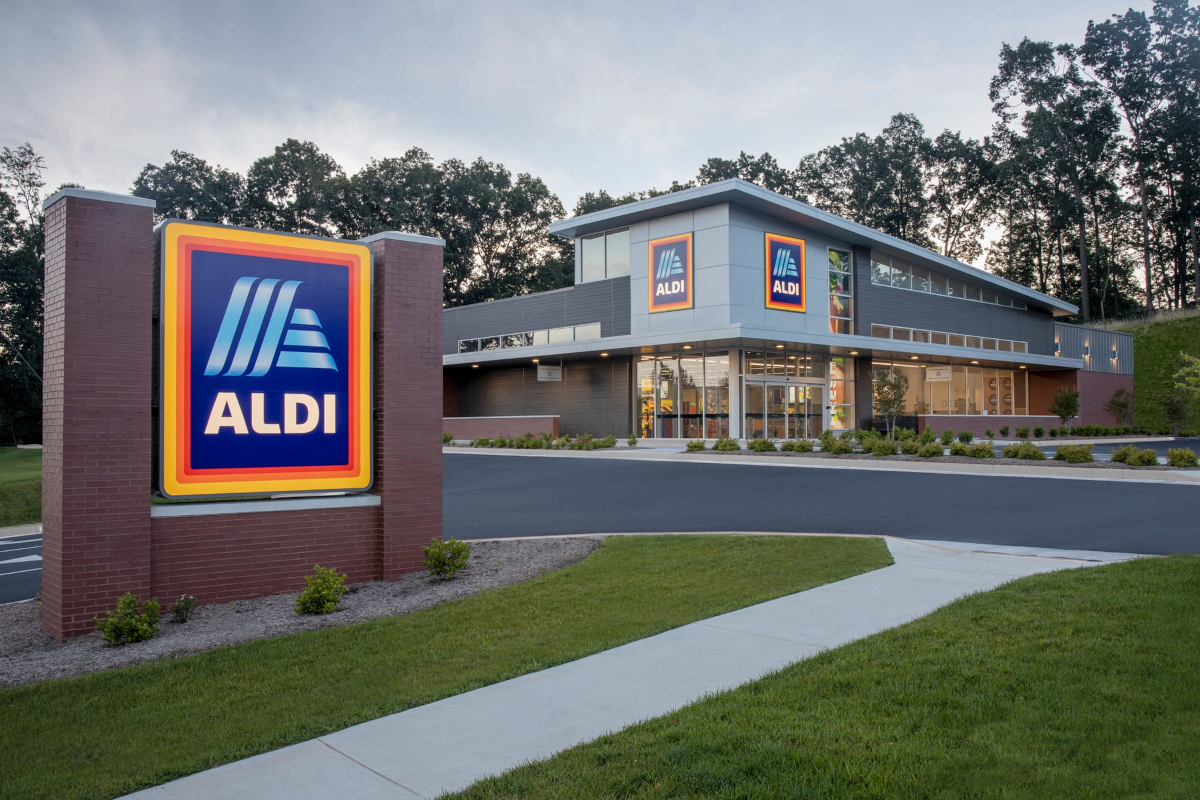
Aldi is doubling down on growth in the U.S., reinforcing its position as the country’s fastest-growing grocery chain. According to The Wall Street Journal, the discount retailer plans to reach 3,200 stores by the end of 2028, up from more than 2,600 locations across 39 states today. Nearly 200 new stores opened in 2025 alone, with major expansion underway in the Southeast—through Winn-Dixie and Harveys conversions—and across Western states.
As Aldi enters its 50th year of operating in the U.S., momentum is building. Demand for affordable groceries continues to rise as inflation reshapes consumer behavior, drawing not only budget-conscious shoppers but also higher-income households seeking value. Editors of Mass Market Retailers and Chain Drug Review recently named Aldi Grocer of the Year, recognizing the chain’s performance and growing influence.
Chief Operating Officer Karla Waddleton told Mass Market Retailers that Aldi’s strategy remains rooted in simplicity and discipline. A smaller store footprint, a curated assortment, and operational efficiency—from quarter carts to private-label dominance—are designed to keep prices low while delivering quality. With 90% of its assortment made up of Aldi-exclusive brands, the retailer is investing heavily in supply chain resilience, supplier relationships, and forecasting to support rapid expansion.
Innovation is pursued selectively, with a clear focus on shopper value. Recent successes include the launch of Summit Popz, a private-label prebiotic soda rolled out in just nine months, and now selling nearly 22,000 cans per day. Technology also plays a role, from electronic shelf labels to expanded delivery options through partners such as Uber Eats.
Waddleton notes that one in four U.S. households shopped at Aldi in the past year, underscoring its growing role in weekly shopping routines. With efficiency, private label trust, and sustainability initiatives tightly aligned, Aldi is positioning itself as a long-term leader in an evolving grocery landscape.