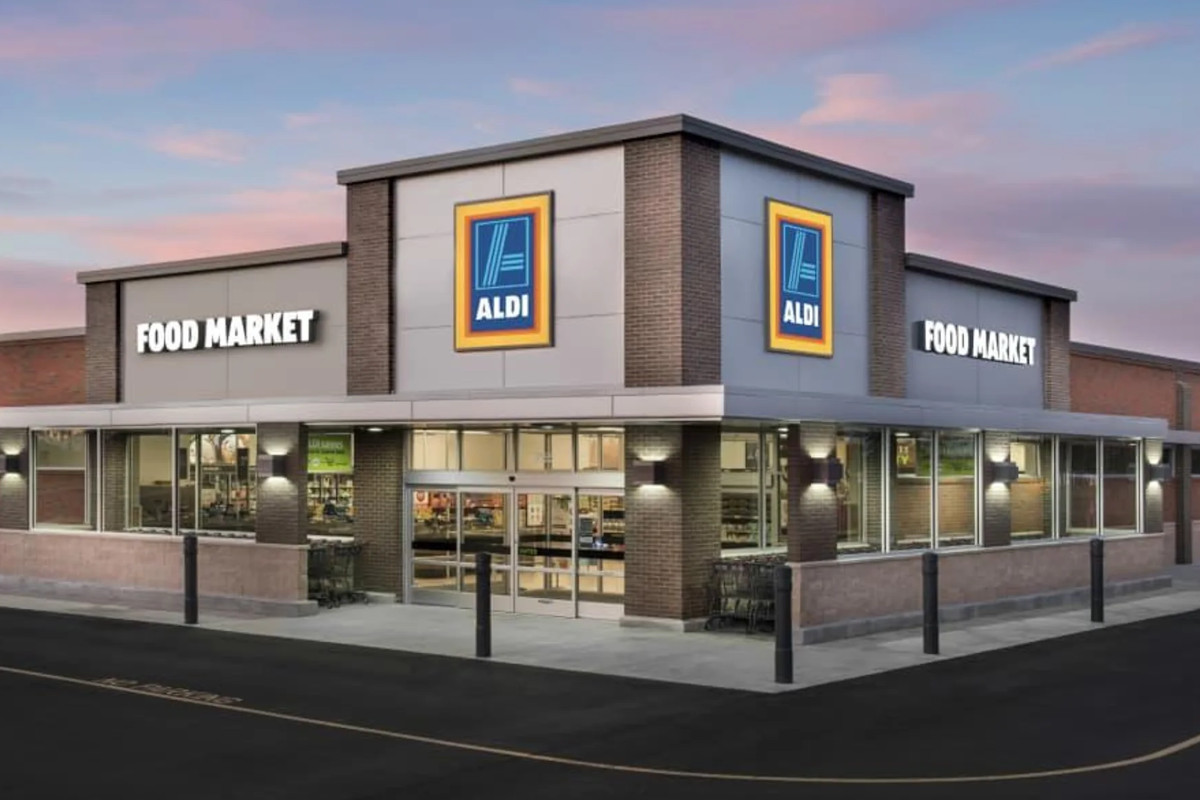
Discount grocer Aldi said it plans to open more than 180 stores in the U.S. this year as Americans across all income levels seek to rein in grocery spending and increasingly turn to discounters for everyday essentials.
The expansion follows an aggressive decade of growth for the German grocer, which opened nearly 200 U.S. locations last year — its biggest annual increase since entering the country in 1976. Aldi had 2,614 U.S. stores as of Dec. 31, making it the third-largest grocer by store count behind Walmart and Kroger.
Alongside new openings, Aldi will relaunch its website, enter Maine as its 40th state, and add new distribution centers in Florida, Arizona, and Colorado over the next five years.
“Consumers now really are not looking for fancy stores, and tens of thousands of different items to choose from,” Aldi U.S. CEO Atty McGrath told CNBC. “They’re really savvy shoppers. They know that private labels can save them money without sacrificing quality.” She added that “people, more and more, are really safeguarding their resources, whether that’s the wallet or their time.”
The strategy appears to be working. Aldi’s store traffic rose by more than 50% from 2019 to 2024, according to Placer.ai and JLL. In 2025, visits increased 8% year over year, outpacing Costco’s 5.9%, Albertsons’ 1.6%, Kroger’s 0.8%, and Walmart’s 0.5%. Overall grocery visits rose 3.1%.
A September survey of 1,635 shoppers by AlixPartners found that the share of grocery spending going to traditional supermarkets declined across all key groups compared to 2024, with sharper decreases among households earning more than $100,000 annually (down 7 percentage points) and shoppers aged 25 to 34 (down 6 points).
“U.S. customers have learned that if you go to a discounter, you’re not buying crap cheaply,” said Matthew Hamory, co-leader of AlixPartners’ global grocery practice. “You’re buying good quality fresh food, good quality private brands.”
Despite the momentum, Aldi still holds just 2.8% of the U.S. grocery market, compared with Walmart’s 21%, according to Numerator data through early October 2025.
Aldi differentiates itself with roughly 10,000-square-foot stores — compared with Walmart supercenters averaging 178,000 square feet — and a limited assortment dominated by private labels, which account for more than 90% of its products and sales. The model emphasizes efficiency, from multiple bar codes on packaging to quarter-deposit shopping carts.
“You might have to shop at another store, and that’s actually OK with us,” said Scott Patton, chief commercial officer of Aldi U.S. “What we want our customers to do is shop Aldi first.”