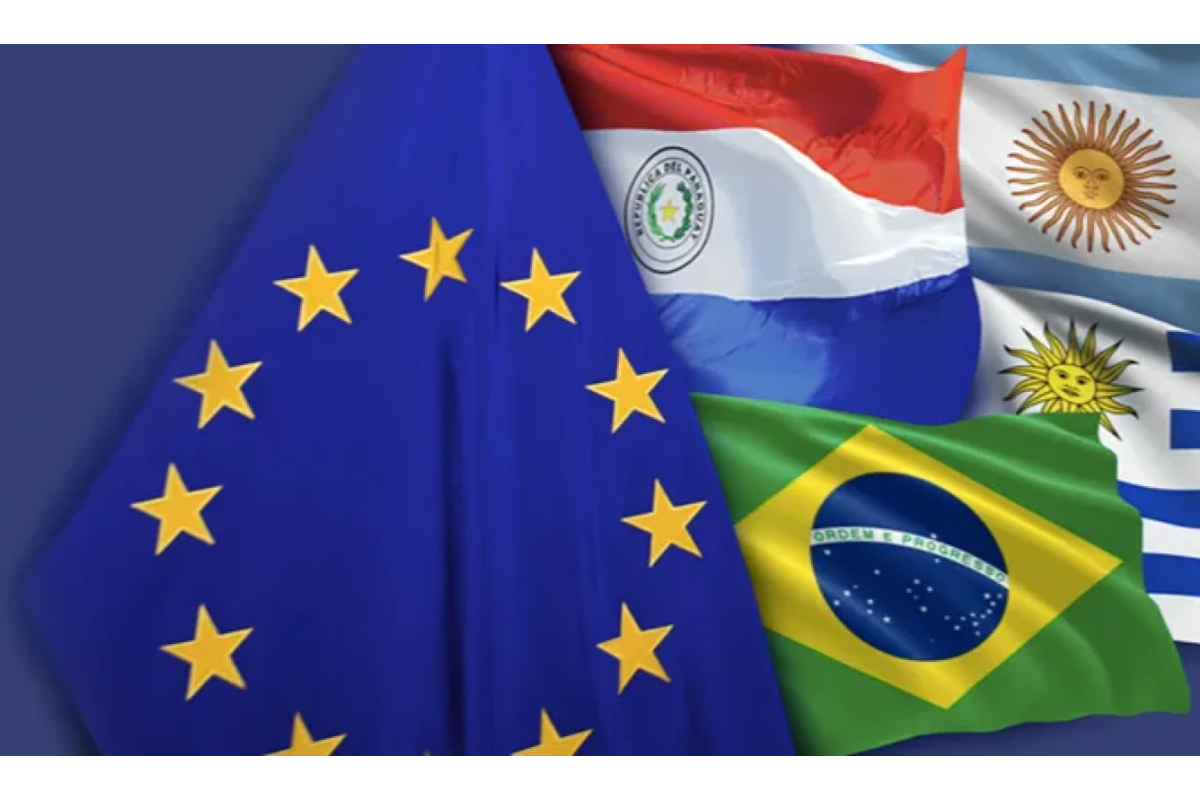
After more than 25 years of negotiations, the European Union is heading toward the final signing of its trade agreement with Mercosur—Brazil, Argentina, Uruguay, Paraguay, and Bolivia—set to create the world’s largest free trade area, encompassing more than 700 million consumers. The formal signature is expected on 17 January in Paraguay, followed by ratification by the European Parliament.
KEY FIGURES OF THE EU–MERCOSUR AGREEMENT
Under the agreement, tariffs will be eliminated on 91% of EU exports to Mercosur and on 92% of South American exports to Europe. For the European agrifood sector, Brussels estimates a 50% increase in exports, driven by the removal of duties that currently reach up to 55% on certain products. Overall savings for EU companies are estimated at more than USD 4 billion per year.
Among the European products expected to benefit most are wine, spirits, chocolate, and processed foods. From Mercosur, imports will mainly include beef, poultry, and sugar, with access subject to regulated quotas and safeguards.
RECORD PROTECTION FOR “MADE IN EUROPE”
The agreement sets a record for the protection of European Geographical Indications (GIs), banning imitation of more than 340 EU GIs—the highest number ever secured in an EU trade deal. Of these, 57 are Italian, ranging from flagship PDO cheeses such as Parmigiano Reggiano, Grana Padano, Gorgonzola, Asiago, and Mozzarella di Bufala Campana, to cured meats like Prosciutto di Parma and Prosciutto di San Daniele, as well as Pomodoro San Marzano and iconic wines including Prosecco, Chianti, Barolo, Brunello di Montalcino, and Franciacorta.
ITALIAN FOOD INDUSTRY REACTIONS
Assica, the Italian association representing meat and cured meat producers, described the deal as offering “enormous opportunities” in a strategic export market, stressing the importance of stable regulatory frameworks and non-discriminatory sanitary measures.
“We have welcomed very positively the overcoming of the impasse toward the signing of the Mercosur Trade Agreement, thanks to today’s understanding on safeguard clauses. The negotiations were long and complex, but we trust that the process will now move swiftly so that all the opportunities offered by this long-awaited, fundamental agreement can be realized soon,” said Lorenzo Beretta, President of Assica.
“Mercosur countries will represent, for companies in the pork sector, an important future outlet market for pork- and beef-based products, in addition to already being suppliers of beef (mainly Brazil, but also Argentina and Uruguay) destined for processing into cured meat products such as bresaola. With this agreement, the world’s largest free trade area is created, with more than 700 million consumers, and the opportunities for companies are enormous,” Beretta concluded.
Federvini, the Italian federation of wine and spirits producers, also welcomed the green light from Coreper, highlighting that the approved clauses provide enhanced safeguards, alert thresholds, and continuous monitoring—key elements to support the growth of wine and spirits supply chains in the South American market.