The Italian food industry has cemented its role as a cornerstone of the national economy, reaching 42.3 billion euros in added value in 2025. According to the 2026 Report: Towards Sustainable Competitiveness, promoted by Federalimentare and produced by the Santa Chiara Lab of the University of Siena, the sector is successfully bridging economic profitability with environmental stewardship and social equity.
Economic growth and trade excellence
With a positive trade balance of 14.3 billion euros, the industry is fueled by the strength of made-in-Italy products. Italy continues to lead Europe in certified products, boasting 897 PDO, PGI, and TSG labels. The workforce has also seen significant expansion, reaching 524,500 employees—a 43% increase compared to 2010—with 75.9% of contracts classified as permanent.
Environmental commitment
Investments in sustainability are yielding tangible results. Between 2008 and 2024, direct greenhouse gas emissions dropped by 27%, even as production increased by over 12%. Furthermore, Italy remains a leader in the circular economy; 75.6% of packaging is currently sent for recycling, significantly outperforming the EU average of 67.5%.
Strategic perspectives for the future
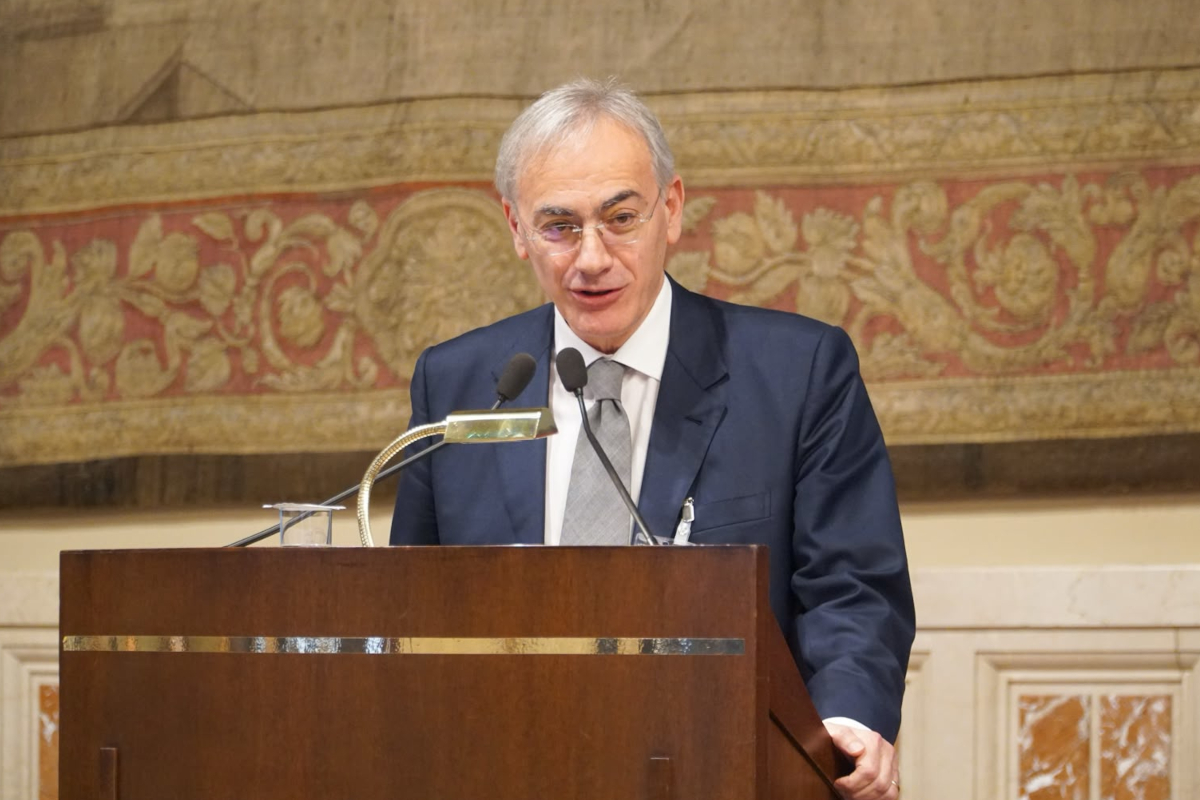
During the presentation at the Chamber of Deputies, Italian Industry Minister Adolfo Urso emphasized that sustainability is no longer just an ethical choice but a strategic lever for competitiveness. Industry leaders and government officials, including Luigi D’Eramo and Paolo Mascarino (pictured, the President of Federalimentare), agreed that future success depends on balancing environmental goals with economic resilience. The report underscores that innovation, digitalization, and the responsible use of resources are essential to protect the Italian agri-food system against global challenges, ensuring long-term prosperity for future generations.