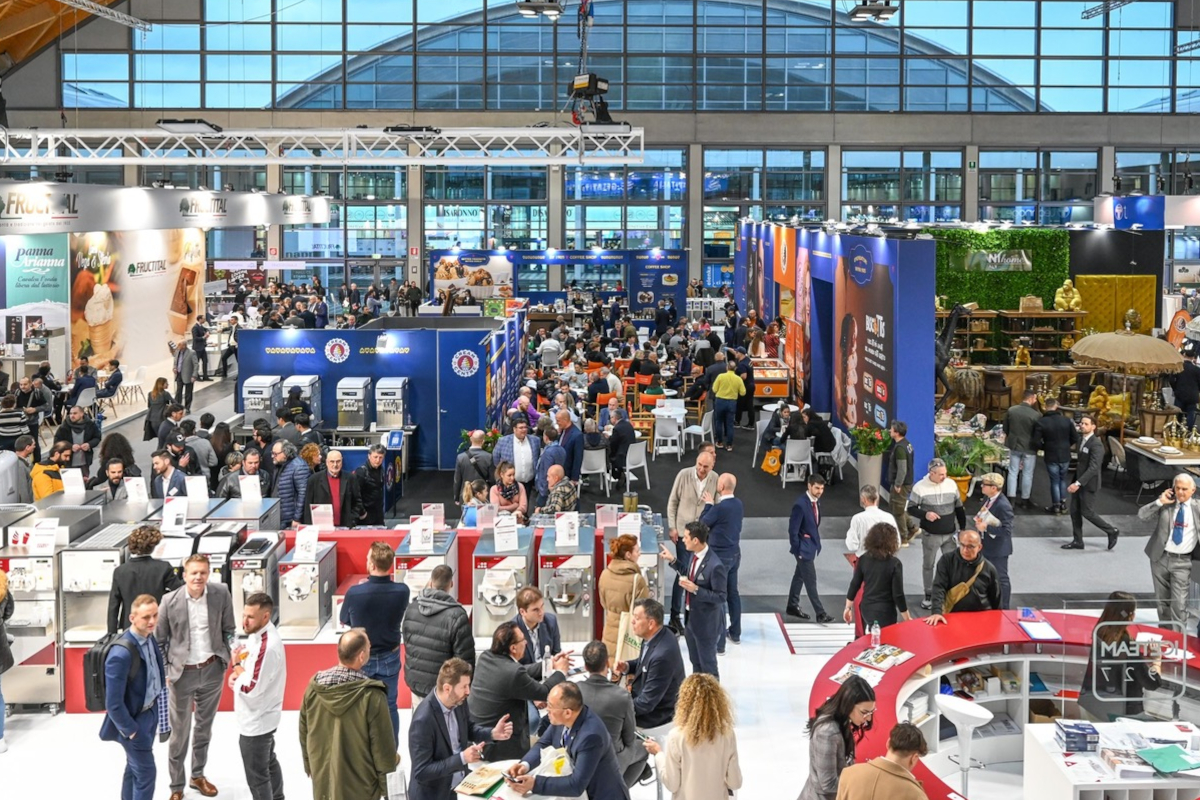
Italian agrifood continues to stand out as one of the strongest drivers of the country’s export performance, according to Matteo Zoppas, President of ICE – the Italian Trade Agency – speaking during his visit to the 2026 edition of Sigep World trade show in Rimini.
“Italian agrifood continues to represent an excellence of our exports. Out of €620 billion in total exports, the sector reached €70 billion in 2024 and is growing by 5.2% in the first 11 months of 2025. This is a significant increase compared with €50 billion in 2021,” Zoppas said.
He highlighted ICE’s role in supporting this expansion through targeted promotion and market access initiatives. “ICE supports this development through promotional and commercial activities: we organize Italian group exhibitions abroad, bring international buyers to Italy – such as the 500 present at Sigep – and provide support through 90 offices worldwide to facilitate business contacts and resolve bureaucratic and certification issues,” he stated.
Zoppas also underlined the strategic importance of the recognition of Italian cuisine as UNESCO Intangible Cultural Heritage, an initiative backed by the Italian government. “The recognition of Italian cuisine as a UNESCO heritage, supported by ourgovernment, has represented a strong strategic contribution. Promotional initiatives linked to this recognition, launched with the dinner at the Fancy Food Show in New York, have enhanced the perception of Italian products in foreign markets,” he said.
According to Zoppas, feedback from companies confirms the impact on positioning. “Entrepreneurs confirm that this has strengthened the positioning of Italian high-end products, enhancing the entire agrifood supply chain,” he added.
Looking ahead, Zoppas pointed to innovative projects as evidence of a forward-looking approach to promoting Made in Italy. “Innovative projects such as the UNESCO candidacy and pasta in space, achieved over the past two years, demonstrate a visionary approach to promoting Made in Italy. This has helped increase that soft power which allows our products to compete more effectively in international markets,” he concluded.