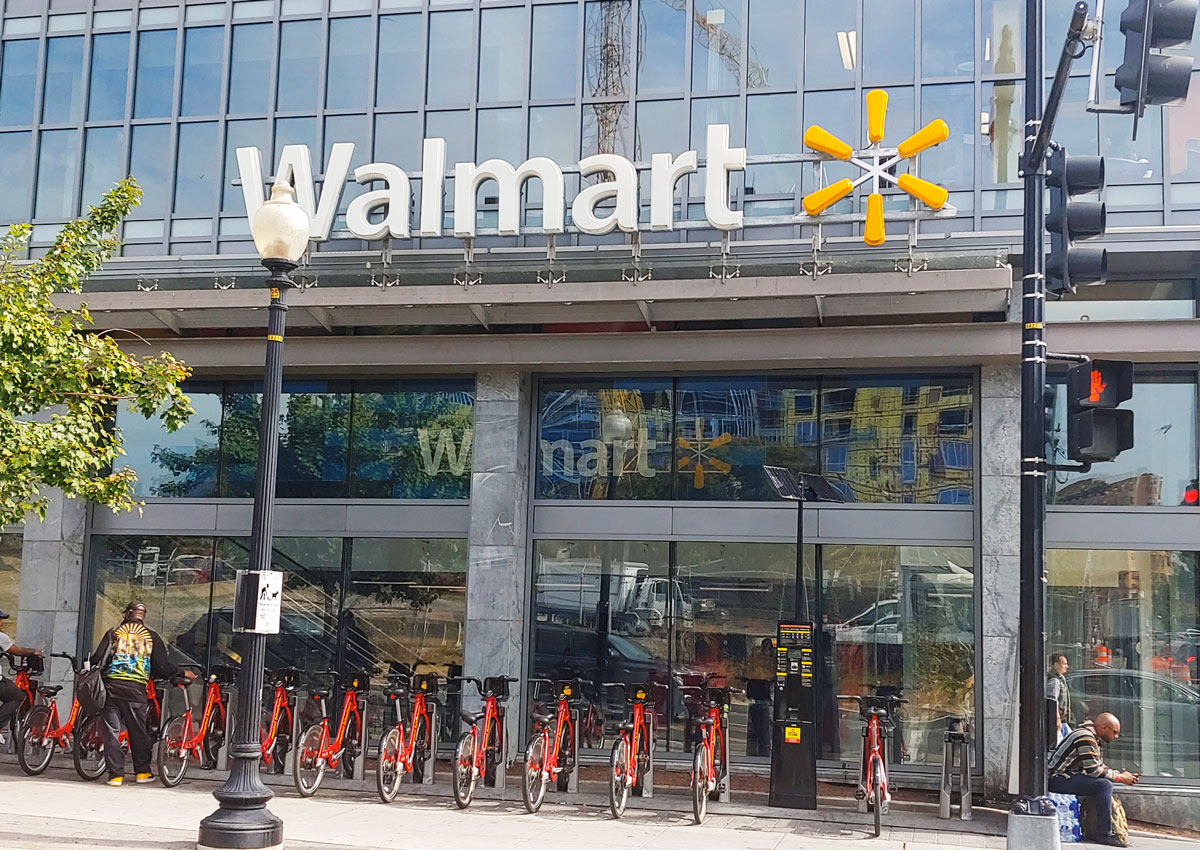
US retail giant Walmart has reported a significant setback in its latest quarterly results, with sales declining for the first time in six years. The performance points to a more cautious US consumer and further indicates that parts of the world’s largest economy are beginning to feel the strain of persistent inflation, higher energy costs and economic uncertainty.
The slowdown is particularly significant for Walmart, a bellwether for the global retail sector. The group’s results suggest that households are becoming increasingly selective in their spending, limiting purchases as they reassess their budgets in a more uncertain economic environment.
The impact of a “K-shaped” economy
The quarterly performance reflects the dynamics of what economists describe as a “K-shaped” economy. On one side, sectors driven by technological innovation continue to expand, while on the other, the middle class is facing mounting pressure from inflation and rising energy costs.
Although Walmart’s overall financial position remains solid, the growing perception of a consumer focused more closely on savings is influencing the retailer’s strategy. The decline in US retail sales recorded in July has further reinforced concerns over the sustainability of current price levels and the strength of consumer demand.
For Walmart, the shift is particularly relevant because its customer base has traditionally made the company a key indicator of household spending trends. A more cautious consumer could put additional pressure on retailers to balance competitive pricing with the need to protect profitability.
Online sales and advertising support profits
Walmart is responding to the slowdown by focusing closely on margins while accelerating activities that are generating higher returns. Despite the weaker sales performance, quarterly operating profit rose 28.8% to $4.94 billion, exceeding analysts’ expectations.
A significant contribution came from the company’s digital business. Online sales increased 23% year on year, underscoring the growing importance of e-commerce to Walmart’s business model. Advertising sales also helped strengthen profitability, providing an additional revenue stream beyond traditional retail operations. The combination of stronger operating earnings, online growth and advertising revenue has therefore allowed Walmart to offset some of the pressure from weaker consumer demand.
Outlook remains positive, but demand is under scrutiny
Despite the more challenging macroeconomic backdrop, Walmart has maintained an optimistic stance, confirming its full-year growth forecasts. At the same time, the group remains alert to signs that demand is becoming increasingly selective. The latest results illustrate the contrasting forces shaping the US economy. While technology-driven sectors continue to benefit from investment and innovation, households facing higher living costs are becoming more disciplined in their spending.
For Walmart, the challenge will be to preserve its reputation for competitive prices while maintaining margins in an environment in which consumers are increasingly focused on value. The latest quarterly figures suggest that even one of the world’s largest retailers is no longer immune to the growing caution among US households.