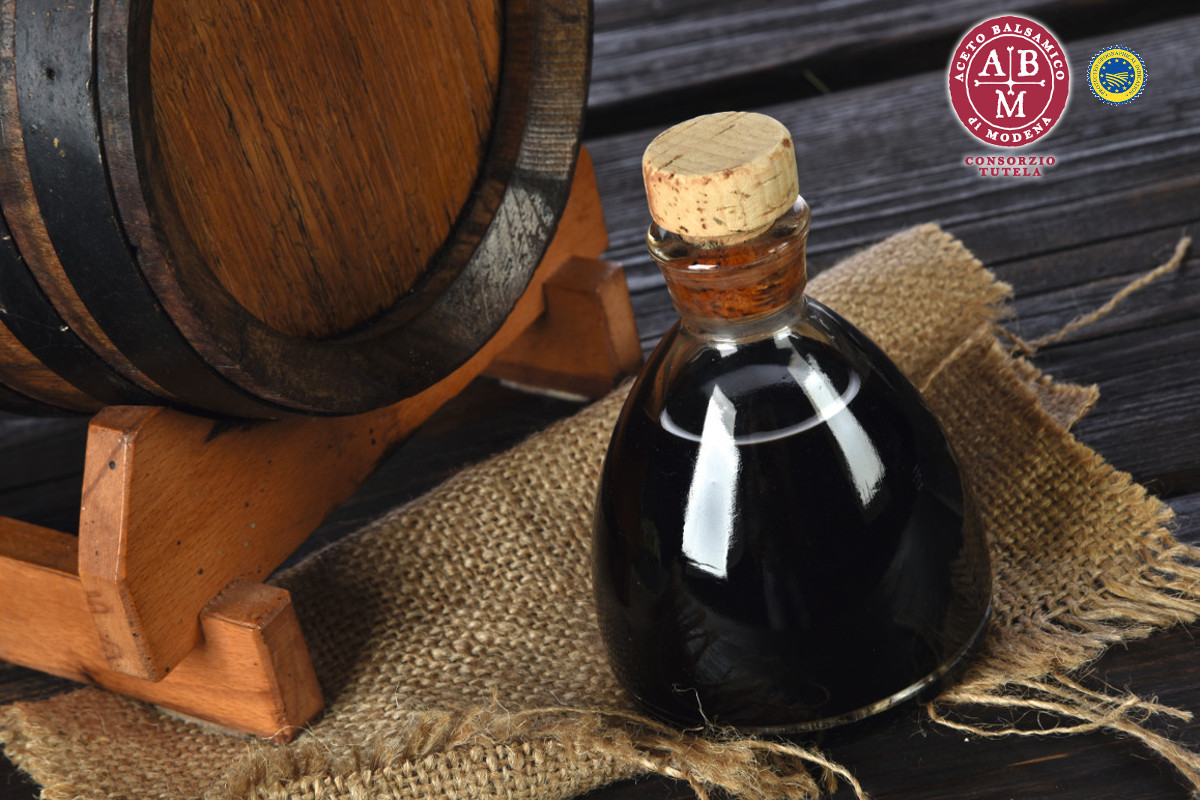
Aceto Balsamico di Modena PGI continues to solidify its status as a global heavyweight for Italian agri-food, commanding the top export share among all Italian PDOs and PGIs. At the Consortium’s annual assembly, leadership revealed that 2025 exports rose by 2.57% year-on-year. This growth comes despite severe macroeconomic pressures, including the ongoing standstill in the Strait of Hormuz, rising energy costs, and shipping disruptions.
RESILIENCE BY THE NUMBERS
The sector’s resilience is anchored by an annual production volume of 93 to 95 million liters, translating to approximately 300 million bottles. This massive output relies on a highly structured infrastructure consisting of 59 certified vinegar cellars, 165 must and wine vinegar producers, and 2,400 distinct agricultural farms cultivating 14,000 hectares of vineyards. The central role of the Consortium is evident, as it directly represents 83% of this total certified production to safeguard the product’s authenticity.
On the international stage, more than 93% of all production is allocated for exports and actively distributed across more than 130 countries. Non-European markets now drive over half of this global trade, led historically by the United States, Germany, and France, while dynamic commercial growth has accelerated across Asia, spearheaded by South Korea and Japan. Financially, this robust international footprint generated over €380 million in production export value, ultimately commanding an estimated consumer market value of nearly €1 billion.
LEADERSHIP INSIGHTS & STRATEGIC PIVOTS
“Balsamic Vinegar of Modena PGI ranks first in export quota among all Italian PDOs and PGIs. Our supply chain does not just combine quality and tradition, but represents a sustainable and strategic economic model capable of resisting global tensions,” said Cesare Mazzetti, President of the Consortium for the Protection of Aceto balsamico di Modena PGI. Mazzetti acknowledged the market volatility, adding, “The current context is constantly evolving. The increase in costs across the entire supply chain risks significantly influencing market balance and final demand. Added to this are side effects related to the blockage of main trade routes. Our priority in this phase is to diversify target markets and try to increase European consumer demand. In times like this, it is precisely our recognized value that makes the difference.”
Reflecting on a challenging 2025—particularly regarding the sector’s largest market, the US—Mazzetti noted that member companies limited the localized annual volume decrease to just 3%, while the opening months of the current year are already showing a swift recovery with a 10% production rebound.
THE PUSH FOR UNESCO RECOGNITION
The assembly also served to relaunch the joint UNESCO Intangible Cultural Heritage candidacy titled: “The tradition of balsamic vinegar between sociality, the art of knowing how to do, and popular culture in the emblematic communities of Modena and Reggio Emilia.”
The unified bid brings together key regional stakeholders, including the Consortium for the protection of Aceto Balsamico Tradizionale di Modena PDO, the Consortium for the protection of Aceto Balsamico di Modena PGI, the Consorteria of Spilamberto, and institutional ministries.
“We welcome the relaunch of this path because it represents an extraordinary opportunity to enhance the cultural dimension of balsamic vinegar and the wealth of knowledge, practices, and traditions that make it unique. This is a project that goes beyond individual entities and concerns the very identity of our communities, our families, and our territory,” said Enrico Corsini, President of the Consortium for the protection of Aceto Balsamico Tradizionale di Modena PDO.